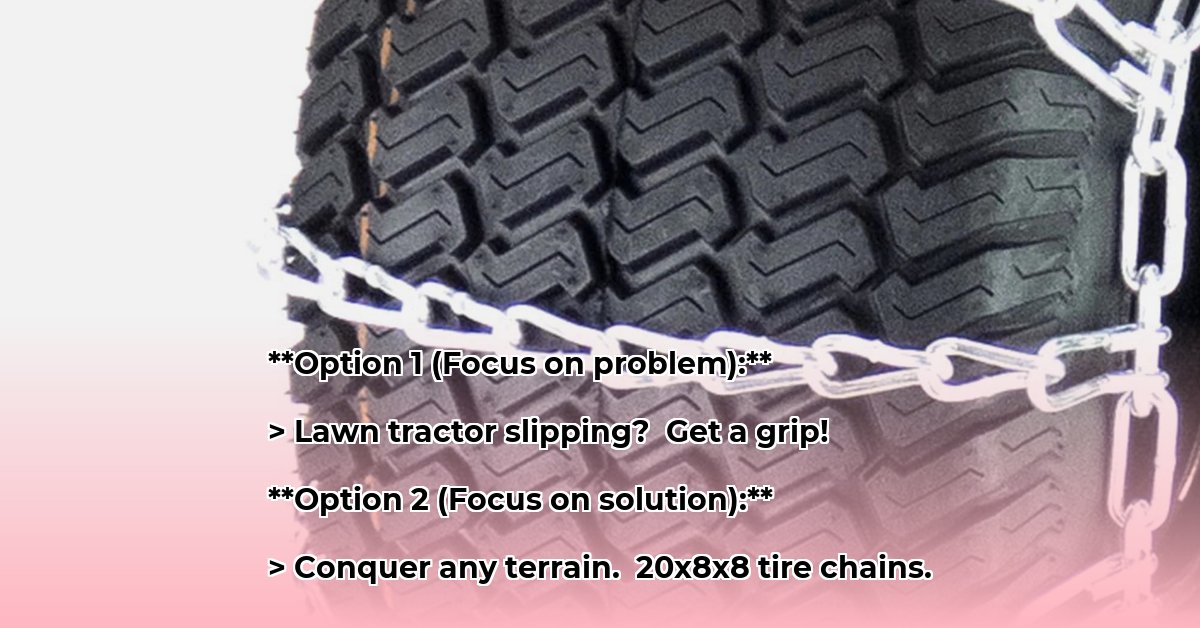
Selecting the Right 20x8x8 Tire Chains
Choosing the correct 20x8x8 tire chains is paramount for optimal traction and equipment longevity. Don't underestimate the importance of this initial step; the right chains will significantly impact your safety and efficiency. Several factors influence your chain selection. For more information on tire chains, check out this helpful resource: Learn More.
Chain Pattern: Diamond vs. Ladder
The chain pattern significantly affects performance on different terrains. Diamond patterns (resembling a studded tire) excel on hard-packed snow and ice, offering superior grip. Ladder patterns, providing more surface area contact, perform better in mud and softer ground conditions. Choose your pattern according to your typical working environment. Do you primarily deal with ice, or is your bigger challenge thick mud? Your choice will significantly impact performance.
Material: Steel vs. Alloy Steel
While both steel and alloy steel chains offer robust performance, alloy steel provides superior strength and durability, resisting wear and tear better than its standard steel counterpart. Although alloy steel chains represent a higher upfront cost, their longer lifespan translates to cost savings over time. The enhanced strength means less stretching and breakage, resulting in less downtime. Is the investment in longer-lasting alloy steel justified given your typical usage and terrain conditions?
Size and Fit: Crucial for Safety and Performance
Ensuring the chains precisely fit your 20x8x8 tires is critical. Incorrect sizing can lead to ineffective traction, damage to your tires or tractor, and pose safety hazards. Carefully measuring your tires beforehand and confirming compatibility with manufacturer specifications is non-negotiable. Manufacturers typically provide detailed fitting charts online; utilize these resources. Failing to do this can cost you more in the long run.
Quality and Brand: Research and Reviews
While price isn't the only indicator of quality, thorough research and reading reviews will help you identify reputable chains that last. Low-quality chains might seem economical upfront, but they frequently break or become ineffective prematurely, ultimately costing you more in the long run through replacements and downtime. Investing in a trusted brand often ensures better performance and durability. What is the balance between upfront cost and long-term value?
Installing Your 20x8x8 Tire Chains: A Step-by-Step Guide
Correct installation is vital for optimal traction and to prevent damage. Follow these steps meticulously. Rushing this process can lead to issues later.
Preparation: Clear any debris (rocks, mud) from around the tires. Wear work gloves for protection.
Positioning: Carefully drape the chains around the tire, ensuring even distribution and alignment of the cross chains over the treads.
Attachment: Securely fasten the chains using the provided tightening mechanisms or hooks. Double-check all connections for a snug fit – this is crucial to prevent slippage.
Tensioning: Rotate the tire by hand and check the chain's tension. Ensure even distribution. Adjust as needed to eliminate kinks or twists. Avoid over-tightening, which can damage tires or chains.
Test Run: Before fully engaging the tractor, perform a gentle forward and reverse test run to evaluate the chain's fit, tension and functionality. Listen for any unusual noises.
Maintaining and Storing Your Chains: Extending Their Lifespan
Proper maintenance significantly extends the lifespan of your chains and optimizes their performance. Neglecting this can lead to premature wear.
Cleaning: After each use, remove mud, snow, or other debris using a hose or brush. Allow the chains to air dry completely before storage to prevent rust. Clean chains perform better and last much longer.
Lubrication: Regularly apply a compatible lubricant (consult manufacturer's guidelines) to reduce friction, minimize wear, and prevent rust. Proper lubrication is key to a chain's smooth operation and long life.
Inspection: Before each use, visually inspect the chains for any broken links, stretching, or damage. Address any issues promptly to prevent further problems.
Storage: Store your chains in a dry, cool place away from the ground to prevent rust and corrosion. Proper storage ensures the longevity of your investment.
Troubleshooting Common Problems
While proper installation and maintenance minimize issues, problems occasionally occur.
| Problem | Possible Causes | Solutions |
|---|---|---|
| Chain Slippage | Loose chains, incorrect installation, excessive wear | Re-tighten chains, re-install correctly, replace worn chains. |
| Broken Chain Links | Impact with objects, excessive wear, poor quality | Replace damaged sections or the entire chain. |
| Excessive Noise | Loose chains, lack of lubrication, wear and tear | Tighten chains, lubricate, inspect for damage. |
| Difficulty Installing | Incorrect chain size, tire obstructions | Ensure accurate tire measurements, clear obstructions. |
Safety Precautions: Prioritize Safety
Safety awareness is paramount when using lawn tractors and tire chains.
Wear Gloves: Protect your hands from potential cuts or scrapes by wearing gloves during installation, removal, and inspection.
Regular Inspections: Conduct thorough inspections of your chains before each use to identify any wear or damage.
Moderate Speed: Operate the tractor at moderate speeds, especially when using chains.
Caution on Slopes: Use extreme caution on slopes or uneven terrain, where traction is crucial. Always operate at a safe speed for the conditions.
Manufacturer's Instructions: Always follow the manufacturer's guidelines for installation and operation.
This comprehensive guide offers practical, actionable advice on selecting, installing, maintaining, and troubleshooting 20x8x8 tire chains. By prioritizing these steps, you'll enhance your lawn tractor's performance, improve safety, and extend the lifespan of your equipment.